Inrikes enhetsfrakt Sverige: 62 SEK

Förlagsfakta
- ISBN
- 9789188031617
- Titel
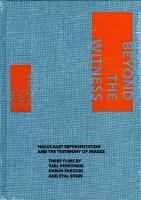
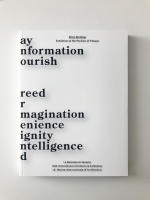
- Beyond the Witness
- Författare
- Katz Thor, Rebecka
- Förlag
- Art & Theory Publishing
- Utgivningsår
- 2018
- Bandtyp
- Inbunden
- Mått
- 177 x 247 mm Ryggbredd 25 mm
- Vikt
- 620 g
- Språk
- English
- Baksidestext
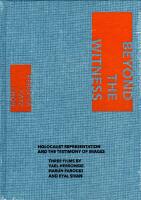
- In a time when all witnesses to the Holocaust will soon have perished, one possible route for commemoration is a return to images, asking what testimony they can give? This book seeks to answer the question of how images can bear witnesses, by examining them as multifaceted entities produced, reproduced and resituated in conflicting political and historical situations. Through a reading of three works that reinterpret archival material and position it in a new time and context, Beyond Witness seeks to explicate this relation and unfold the implications of that movement. In the three archive-based works, "Respite" by Harun Farocki (2007), "A Film Unfinished" by Yael Hersonski (2010), and "The Specialist: Portrait of a modern criminal" by Eyal Sivan (1999), the materials are reactivated and reinterpreted. The films are based on archival materials which are reworked visually and aurally. The pieces of footage discussed are understood as incomplete; like individual testimony that is dependent on context. Footage produced as internal Nazi propaganda and the video recording of a politically charged trial in the aftermath of the Holocaust now mean something else. Photographic images, moving or still, are bound to their contexts and conditions of production and presentation. Therefore, the testimony of images can be grasped through their archival conditions, context and framework (conditions for production) and means of representation (voice, narration and gaze). These means offer the framework for the analysis through which the testimony of images can be understood.
9789188031617